
4 min to read
Risks that can affect the integrity of your wind turbines
Published: June 2, 2024
Updated: July 10, 2025
Table of content
As we harness the winds of progress in renewable energy, it’s essential to remain vigilant about the risks that can affect your wind turbines’ integrity.
Here are some key insights to keep your turbines running smoothly and sustainably.
Types of risks
During operation, wind turbines have to withstand wind and weather, which over time can damage various components such as the rotor blades. These include:
Extreme weather events
Violent storms and lightning strikes can cause significant structural and surface damage to turbines, leading to costly repairs. Our monitoring system can detect lightning strikes early, minimizing damage.
Component wear and tear
As turbines age, parts such as bearings, gears, and blades wear out, increasing the risk of unexpected failures.
Electrical system faults
Malfunctions in the electrical systems can lead to downtime and pose a safety risk to personnel and surrounding communities.
Environmental factors
Factors such as ice accumulation, salt corrosion (for offshore turbines) and other environmental factors can contribute to turbine damage if not properly addressed.
Further details about continuous blade monitoring?
Our whitepapers cover various important topics in depth to give you detailed information on different aspects such as lightning detection, damage detection or icing.
Importance of continuous condition monitoring
Continuous condition monitoring is a reliable way of detecting anomalies in condition and performance at an early stage. Here are 5 reasons why it is indispensable:
- Early detection of damage before major failure: Continuous monitoring enables operators to spot anomalies or damage early, allowing for proactive maintenance before minor issues escalate into major problems.
- Make informed decision on real time events: By continuously monitoring events such as ice accumulation, lightning strikes, damage etc. it is possible to shortly react on any circumstances and decide if the turbine needs to be shut down or keep it running and take care of it in the next inspection.
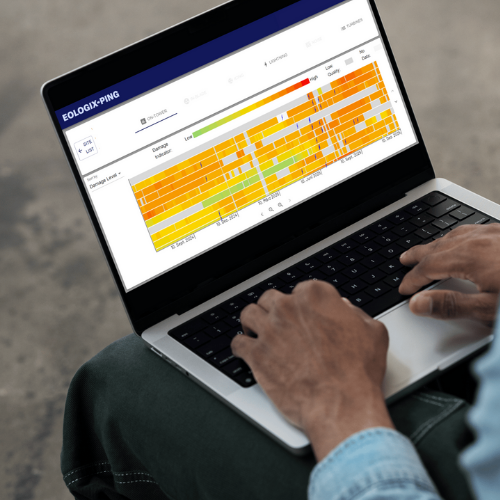
- Monitor changes in damages: A condition monitoring system tracks trends and damage progression, helping to determine the optimal time for repairs.
- Cost savings through better maintenance planning: Preventive maintenance based on continuous monitoring reduces downtime, lowers repair costs, and extends turbine lifespan, resulting in significant long-term savings.
- Data-driven decision making: Access to comprehensive data analytics facilitates informed decision-making, allowing operators to prioritize maintenance activities and allocate resources efficiently.
In summary, continuous condition monitoring is not only a smart strategy, but also a crucial prerequisite for the longevity and optimal performance of your wind turbines. Let’s harness the power of technology to protect the investments and pave the way for a greener, more sustainable future.
Share this blog post


Get your whitepaper
Find out everything you need to know about damage detection, lightning strike monitoring, ice detection or blade heating in our whitepapers.
Similar blog posts



Subscribe to our newsletter
Stay informed with the latest industry news, fascinating insights, and updates from EOLOGIX-PING delivered straight to your inbox.
PS.: We promise no spam.