4 min to read
Lightning monitoring beyond cellular coverage
Published: June 2, 2026
Updated: July 13, 2026
Table of content
Why remote wind farms need turbine level lightning visibility
Wind farms are increasingly being developed in remote regions where wind conditions are strong, land availability is high, and grid expansion is accelerating. Many of these sites share one operational challenge: limited or unreliable cellular connectivity.
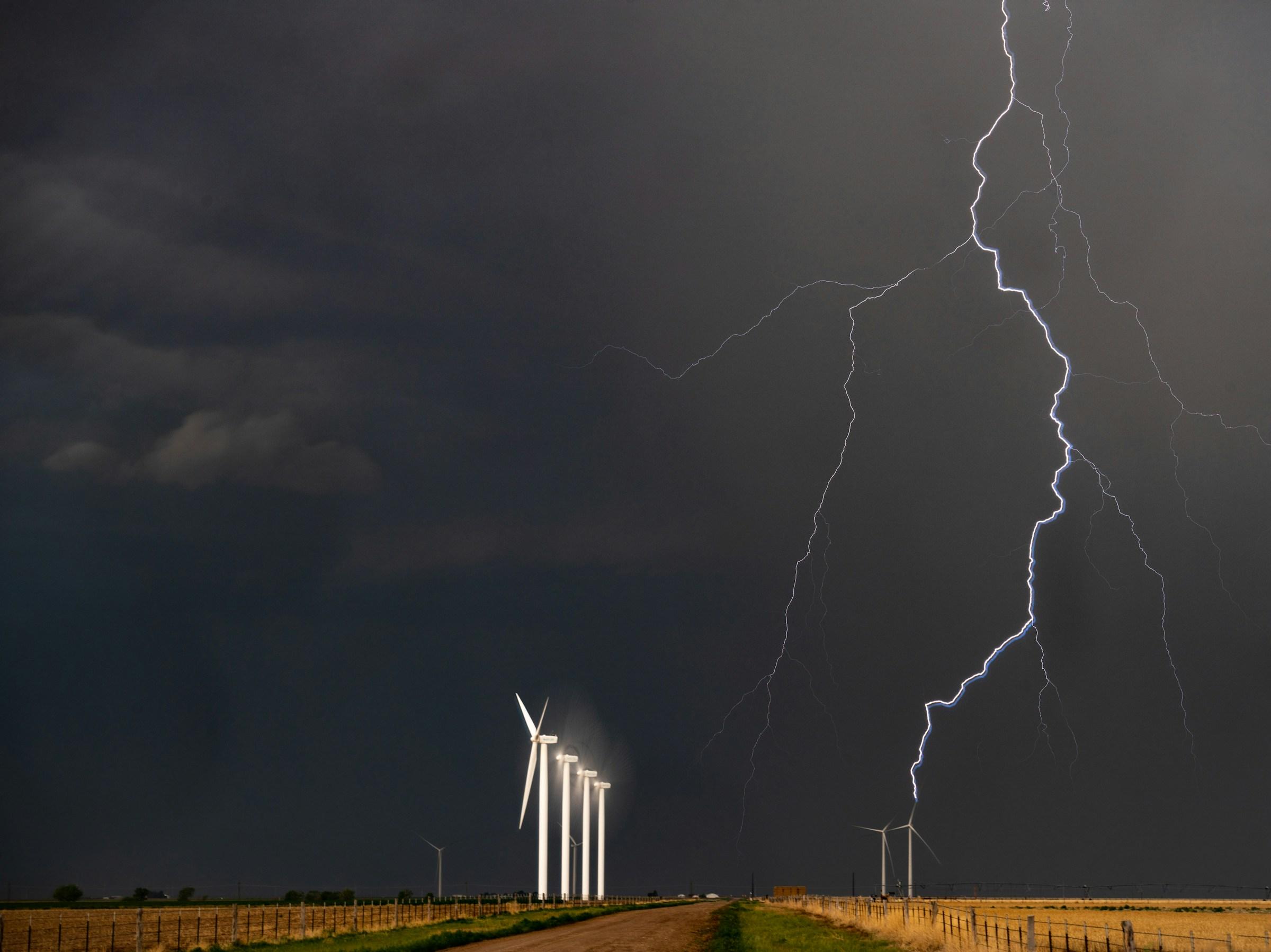
For wind asset managers, this creates a major blind spot after thunderstorms and lightning events. Knowing whether lightning occurred near a wind farm is useful. But knowing which turbine was actually struck is operationally critical. That is why EOLOGIX-PING is launching the satellite version of :EVENT LIGHTNING FLEET, bringing turbine level lightning monitoring to wind farms beyond cellular coverage.
The operational problem with lightning events
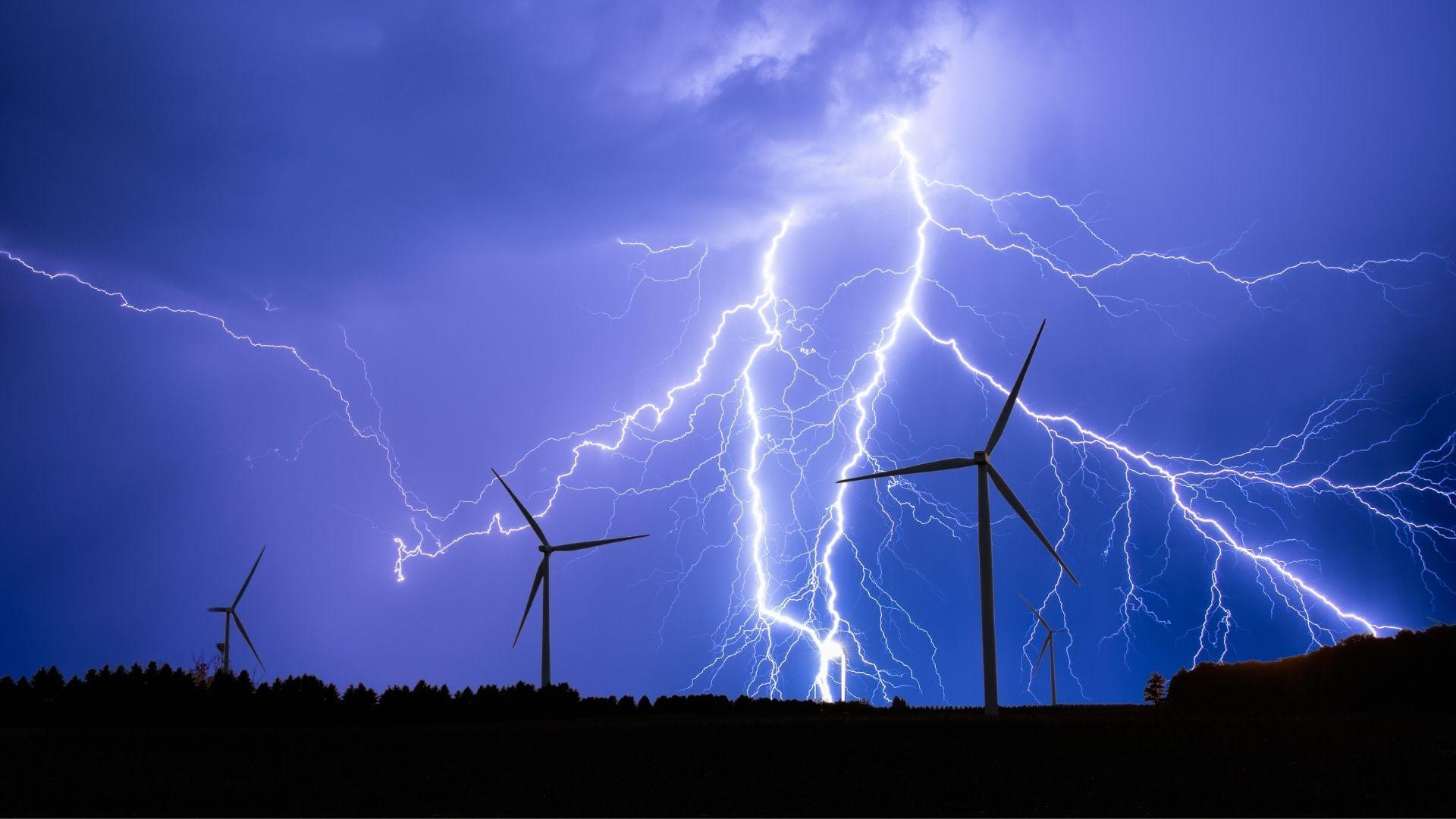
Lightning strikes can cause significant blade damage and operational risk for wind turbines. In some cases, the effects are immediate. In others, damage may only become visible weeks or months later.
After a thunderstorm, operators often face difficult questions:
- Which turbines require inspection?
- Which assets may already be damaged?
- Can turbines continue operating safely?
- Are inspections being prioritized efficiently?
- Is there enough data to justify shutdown decisions?
Without turbine level information, operators may perform large scale visual inspections across multiple turbines, consuming time, personnel, and budget without clear evidence of which turbines were actually affected.
Everything you need to know about lightning detection
Lightning strikes are among the leading causes of unplanned turbine downtime, and not every detection system gives you the full picture. Our whitepaper covers how to reliably detect strikes, assess the risk for your specific site, and decide on next steps, so you know exactly what to do after a storm.
Why traditional lightning detection is not always enough
Many operators rely on radio wave based lightning location services or national weather systems to understand lightning activity near wind farms. These systems are valuable for regional weather awareness, but they are not designed specifically for turbine level operational decision making.
An additional challenge is that low current lightning strikes can be difficult for radio based systems to reliably detect. Yet these lower current strikes can still cause significant blade damage. EOLOGIX-PING’s :EVENT LIGHTNING was specifically designed to address this gap.
How :EVENT LIGHTNING works
The :EVENT LIGHTNING detects lightning events directly at the turbine tower. A magnetic field detector installed inside the Power and Communication Module (PCM) captures the magnetic field generated when lightning current travels through the turbine structure.
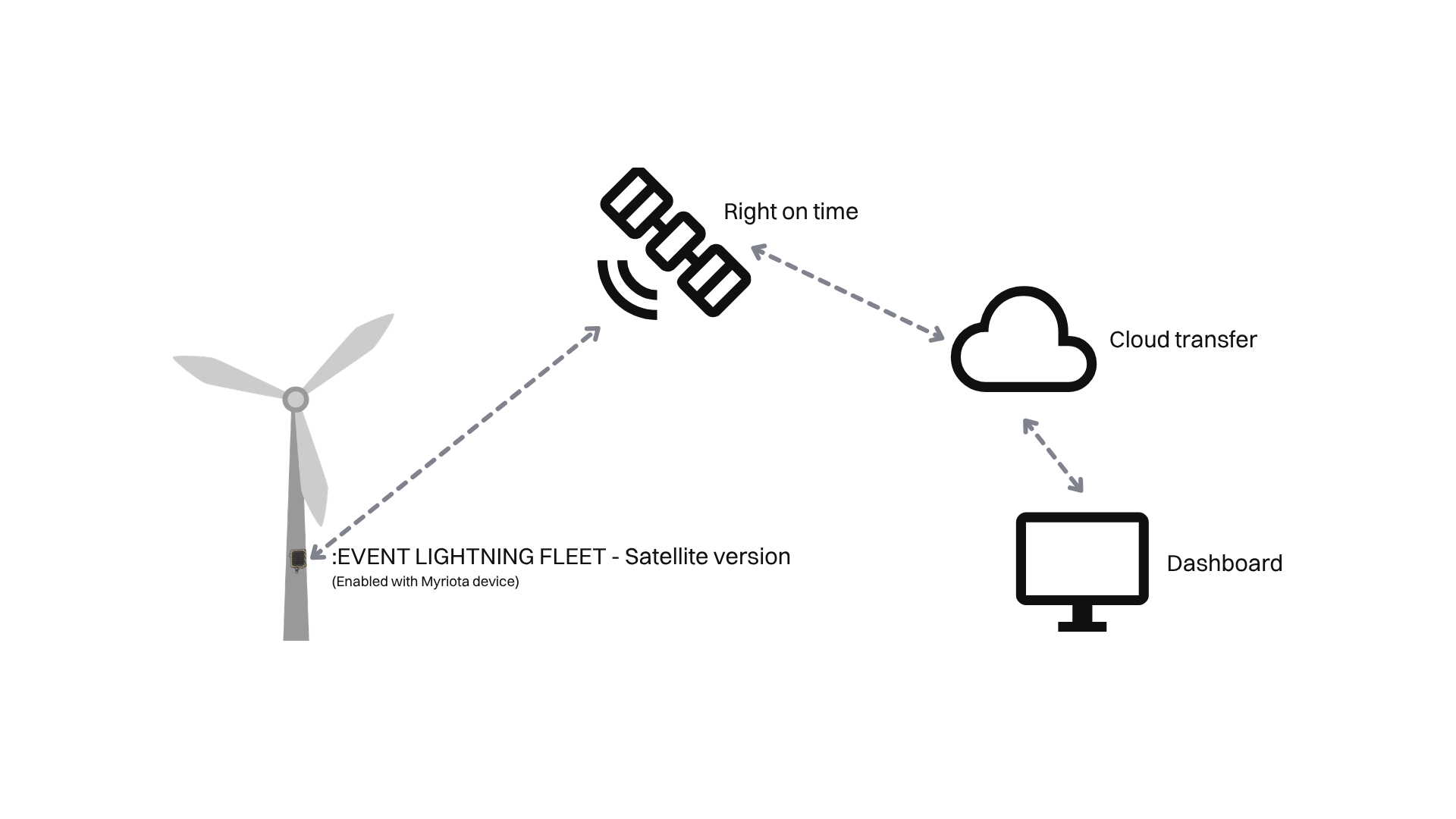
When a strike event is detected, the system generates an event notification and transmits it to the cloud. The result is practical operational insight: Know which turbine was struck
This allows operators to:
- Narrow inspection scope
- Reduce unnecessary inspections
- Prioritize field resources
- Support faster maintenance decisions
- Reduce operational uncertainty after storms
Introducing satellite connectivity for remote wind farms
Until now, communication relied on cellular networks. With the launch of :EVENT LIGHTNING FLEET – Satellite version, EOLOGIX-PING now enables the same turbine level lightning monitoring capability using satellite communication (enabled with a Myriota device).
This expansion is especially important for:
- Remote wind farms
- Low connectivity regions
The use case remains unchanged. The strategic innovation is connectivity. Wind asset managers can now deploy turbine level lightning monitoring in locations where cellular based systems are not practical.
Built for wind asset managers
The satellite version was developed specifically for operators who:
- Manage remote wind farms
- Experience lightning related inspection costs
- Need better post storm operational visibility
- Want to optimize blade inspection workflows
- Require monitoring beyond cellular infrastructure
EOLOGIX-PING offers two commercial models a yearly subscription fee or a one-time investment. This flexibility allows operators to align deployment with procurement and budgeting preferences.
Expanding operational visibility beyond cellular coverage
As wind farms continue expanding into remote regions, operational monitoring systems must evolve alongside them. With :EVENT LIGHTNING FLEET – Satellite version, EOLOGIX-PING extends turbine level lightning monitoring to sites where traditional communication infrastructure is no longer sufficient.
The result is a practical operational capability for remote wind energy assets: Know which turbine was struck, even beyond cellular coverage.
Share this blog post


Get your whitepaper
Would you like to dive deeper into continuous condition monitoring for wind turbines? Find out everything you need to know in our whitepapers.
Similar blog posts

Subscribe to our newsletter
Stay informed with the latest industry news, fascinating insights, and updates from EOLOGIX-PING delivered straight to your inbox.
PS.: We promise no spam.