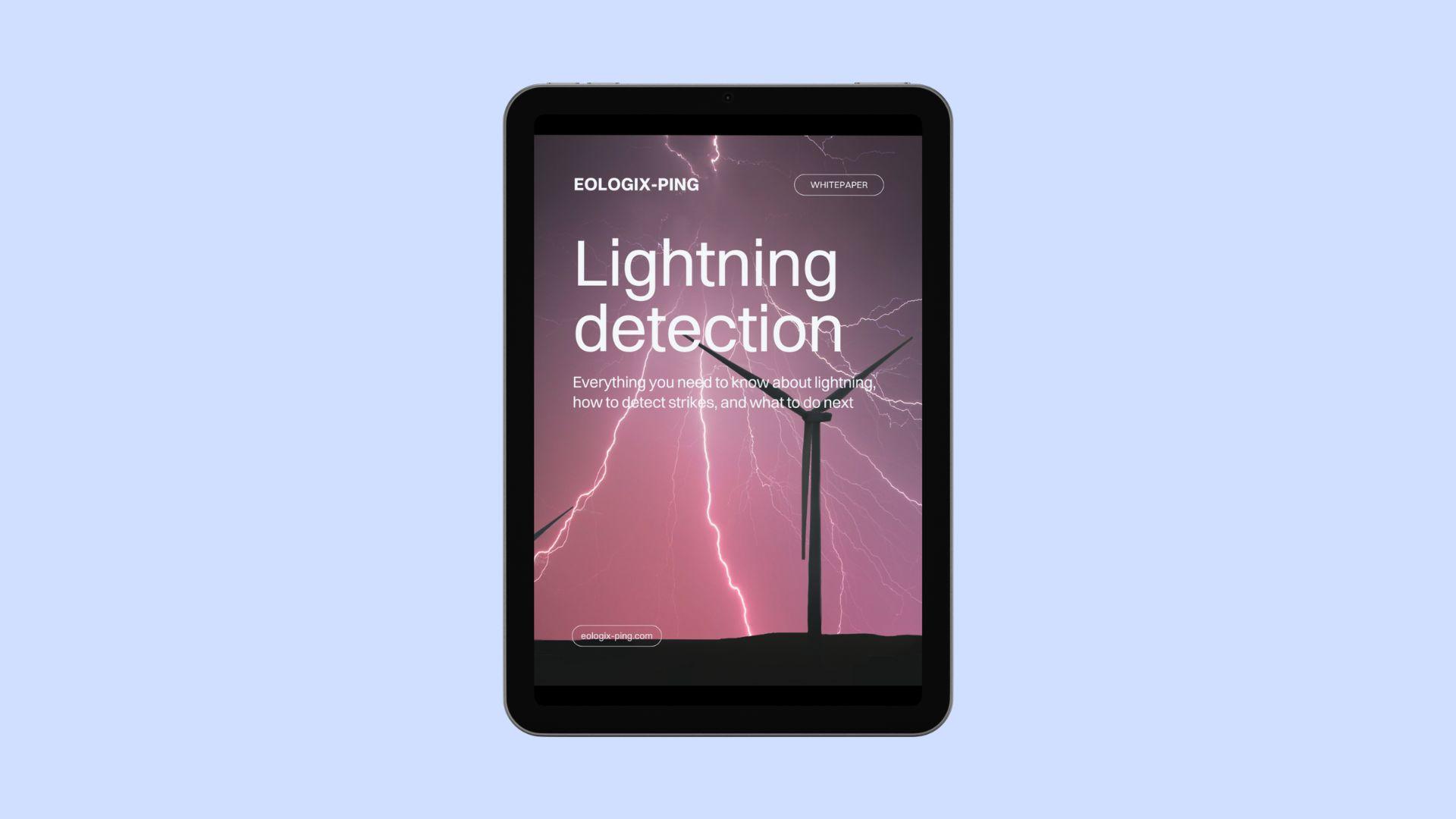
Lightning detection
Whitepaper Lightning detection
Everything you need to know about lightning, how to detect strikes, and what to do next.

What you will learn
In this whitepaper you will find out how lightning effects wind turbines and the benefits of using a lightning monitoring system to confirm strikes.

Effects of lightning on wind turbines
Our Whitepaper Lightning detection describes the effects and consequences of lightning strikes in wind turbines.
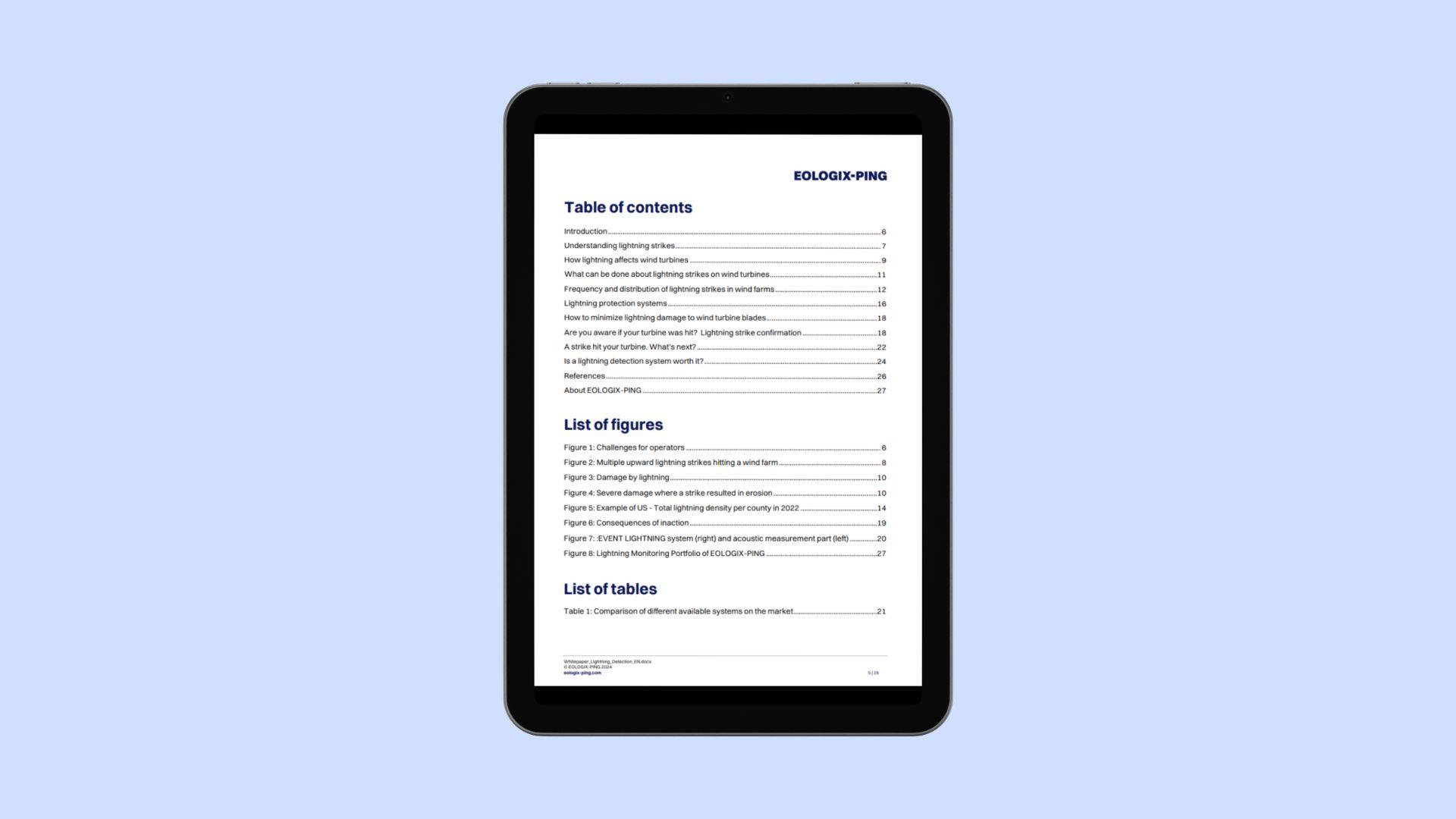
Frequency and distribution of lightning strikes in wind farms
The frequency and distribution of lightning strikes vary based on different factors. Understanding these factors is critical for wind farm operators.
How to minimize lightning damage to wind turbine blades
The paper provides insights on how to reduce the risk of lightning strikes and compares common lightning monitors.
Your benefits by using a lightning monitoring system to confirm strikes
Here you can find out why you should rely on proven lightning detection systems and how your wind farm can benefit from them.
About the whitepaper
Welcome to the Lightning Detection Whitepaper. You are about to dive deeper into the crucial topic of lightning detection and the impact of lightning strikes on wind farms.
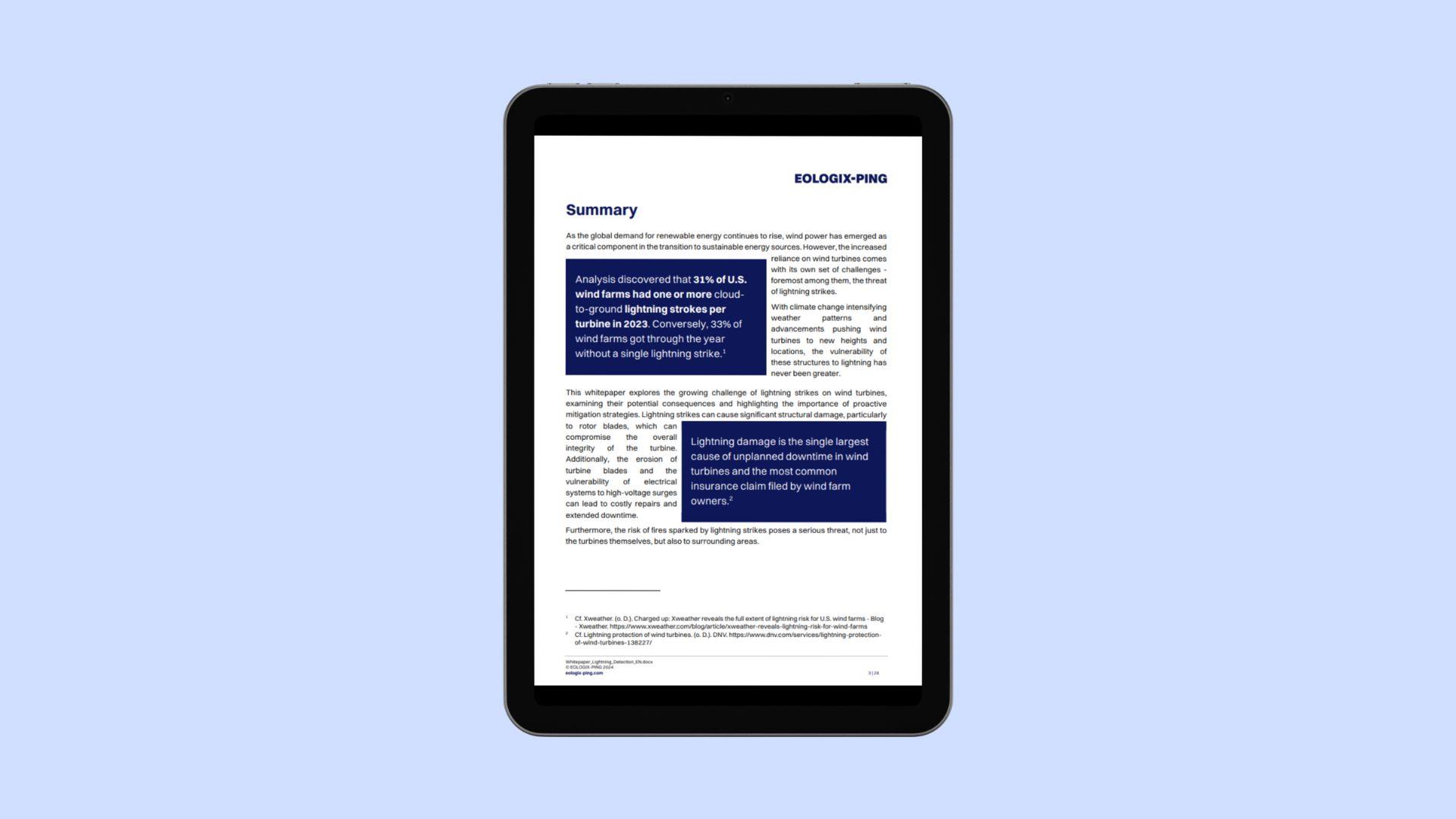
Lightning strikes have a significant impact on all wind turbines. Lightning damage is the single largest cause of unplanned downtime in wind turbines and the most common insurance claim filed by wind farm owners (Source: DNV).
Lightning strikes pose a significant risk, especially to rotor blades, which can lead to substantial damage and compromise the turbine’s overall structural integrity. In this paper, we outline methods for early detection of lightning strikes and any resulting damage, and provide an overview of the current state of technology and practices, giving you a comprehensive understanding of the situation.
Frequently Asked Questions (FAQs)
Yes, definitely. While a good weather service provides valuable data, it may not always detect lightning strikes affecting specific turbines, especially in the case of upward strikes, potentially delaying your response to critical issues. With continuous lightning monitoring, you won’t miss any lightning events. In 99% of cases, lightning strikes are reported within a radius of 1 to 5 km, depending on the measurement methods available in the wind farm’s region. This requires time and effort to investigate if a turbine was struck and to check all turbines within that radius.
We will always keep your personal information safe.
We ask for your information in exchange for a valuable resource in order to improve your browsing experience by personalizing the EOLOGIX-PING site to your needs, to send information to you that we think may be of interest to you by email or other means and to send you marketing communications that we think may be of value to you. You can read more about that in our privacy policy.
Absolutely!
Just sharing some free knowledge that we hope you’ll find useful. Keep us in mind next time you have questions regarding rotor blade monitoring!
Complete the form and after that check your inbox. You have to confirm your email address to receive our free whitepaper about lightning detection.
Fill in the form and get the whitepaper
It's almost time. All you have to do is fill in the form and you will receive our free whitepaper to download.
Share this whitepaper

